Saturday, January 29, 2011

Hearsay and Estate Litigation

If I testify in court that Jill told me that Jack fell down and broke his crown in order to prove that Jack did, in fact, fall down and broke his crown, then my evidence is hearsay. Testimony about an out of court statement by someone else to prove the truth of the matter asserted by that other person is hearsay. In British Columbia, hearsay is generally not admissible in court.

But my testimony about what Jill told me about Jack may be admissible in some circumstances. For example, I may be relating what Jill told me, not to prove that Jack fell down and broke his crown, but for the non-hearsay purpose of explaining why I called an ambulance. Or, the court might admit my testimony, even to prove that Jack fell down and broke his crown, if the court finds that the evidence is necessary and it is sufficiently reliable to consider despite the fact that it is hearsay.

In estate litigation, the courts often consider statements about what the deceased person had said. Often the court receives such evidence without objection. On what basis are these statements admitted? Most reported estate litigation judgments in British Columbia do not contain discussions about the admissibility of statements about what the deceased said. Mr. Justice Groves’ decision in the recent case of Modonese v. Delac Estate, 2011 BCSC 82, is an exception.

Regina Delac died on August 20, 2005. She had two children: a son, Marko Delac, and a daughter, Helena Modonese. With the exception of a three-year period beginning in 1989, Marko Delac lived with his mother in her home on Royal Oak Avenue in Burnaby. His wife and, while they were growing up, his children, also lived in the Royal Oak Avenue home.

A couple of years before she died, Regina Delac signed a transfer form, transferring her house into a joint tenancy with her son. She signed the transfer in front of a notary public, whom her son had contacted, while sitting in Marko Delac’s car. Mr. Delac was either in the car or standing nearby when she signed the transfer.

On Regina Delac’s death, title to the house at Royal Oak Avenue passed to her son by right of survivorship. Her only other financially valuable asset was her bank account which held about $35,000.

In her will, Regina Delac said that her estate was to be divided equally between her son and daughter. But if the house passes to Marko Delac by right of survivorship, there would only be $35,000 less estate liabilities to be divided between Regina Delac’s two children.

Helena Modonese challenged the transfer of her mother’s house into a joint tenancy with her brother on the grounds of undue influence and resulting trust.

To establish undue influence, Ms. Modonese relied on a presumption that arises when the nature of the relationship between the person who makes a gratuitous transfer (in this case Regina Delac) and the recipient (her son) is such that the recipient s in a position to dominate the transferor. When the presumption arises, then the recipient must prove that he did not exercise any undue influence, often by showing that the transferor acted spontaneously and received independent advice.

A resulting trust is a presumption that arises when one person gratuitously transfers property to another. The presumption is that the transferor did not make a gift, but rather that the recipient holds the property in trust for the transferor, and after the transferor’s death, for his or her estate. The recipient may rebut the presumption of resulting trust by proving that the transferor intended to make a gift of the property.

Ms. Modonese relied on statements her mother made to her, to daughter Linda Modonese, and to Regina Delac’s sister Helen Uzelak, to challenge the transfer of the house into a joint tenancy with her brother. For example, Regina Delac told her sister that Marko Delac had slapped and choked her in 1989 or 1990. After this incident the police came, and Marko Delac and his family moved out of the home for three years. Mr. Justice Groves summarized the evidence objected as hearsay at paragraphs 73 and 74:

[73] In their written submissions, the parties highlight a number of statements made by the deceased, which the defendant asserts are inadmissible hearsay. The most important of these for the present purposes appear to be:
(a) A statement to Linda Modonese regarding a physical altercation between Marko and Regina;
(b) A statement to Helena and Linda Modonese to the effect that it was Regina’s intention for Helena and Marko to share equally in the estate and more specifically in the house;
(c) A statement to Helen and Helena wherein Regina told them that she was afraid of upsetting Marko;
(d) A statement to Helen and Helena wherein Regina told them that she was afraid of Marko;
(e) Most importantly, Helen’s evidence that prior to her death, Regina told her that she had signed something and that she did not know what she signed. The defendant had told her to sign. She did not like this. She wondered how the defendant’s name was on the municipal tax notice.  
[74] An out of court statement tendered for the truth of its contents is presumptively inadmissible. The hearsay rule has been traditionally regarded as an absolute rule, and acts as an exception to the general principle that all relevant evidence is admissible.

Mr. Justice Groves considered whether the evidence fell within a tradition category of hearsay exceptions. These are certain categories of out-of-court statements that the courts have developed over many years. He then considered whether those statements that do not fall within a traditional category should be admitted under the principled approach of considering the necessity and reliability of the evidence.

Statements Regina Delac made to others that she was afraid of her son, and that she intended for her children to share her house and bank accounts equally, fall within the traditional hearsay exceptions for statements made to prove a person’s intention, mental or emotional state. Mr. Justice Groves wrote at paragraphs 82 through 86:

[82] In Pasko v. Pasko, 2002 BCSC 435, 100 B.C.L.R. (3d) 354 [Pasko], a dispute arose as to the admissibility of statements made by deceased parents to their children in connection with a dispute over whether property had been gifted to certain of the children. Halfyard J. noted at para. 10 that there is an “exception to the hearsay rule which permits evidence to be given of statements made by deceased persons as to their present state of mind (including intention), which statements need not be against interest, provided that the deceased person's state of mind is relevant to an issue in the case.” 
[83] Pursuant to this exception, Mr. Justice Halfyard admitted statements relating to the deceased parents’ intentions to confer a gift, made before and at the time of the two transactions in question.
[84] Following Pasko, if I am wrong in concluding that the statements concerning Regina’s intention to divide her assets equally are not admissible pursuant to s. 5 of the WVA, they ought to be admitted pursuant to this exception to the hearsay rule.
[85] Declarations of mental or emotional state are also an established exception to the rule against hearsay. In R. v. Smith, [1992] 2 S.C.R. 915, 94 D.L.R. (4th) 590 [Smith cited to S.C.R.], the Court held that the state of mind exception to the hearsay rule permits reception of evidence to prove the declarant’s state of mind, but not the truth of the factual assertion which may be contained in it. Statements attributed to a deceased declarant tending to show her state of mind, namely a fear of the defendant, are admissible under this exception to the hearsay rule: R. v. Evans, 2002 BCSC 1674 at para. 35, [2002] B.C.J. No. 3100. 
[86] Accordingly, the statements attributed to Regina concerning her fear of the defendant and her fear of upsetting him are admissible pursuant to this exception.

Mr. Justice Groves admitted Regina Delac’s statements of physical violence, and that she signed something her son told her to sign but did not know what she signed under the principled exception, which he explained as follows:
[88] The statements referred to above under headings “a” and “e” (the physical altercation and the evidence that Regina did not know what Marko had asked her to sign) do not appear to neatly fit under any of the established exceptions to the hearsay rule. I now turn to a consideration of the “principled approach” to hearsay.
(i) Necessity
[89] The principle of necessity does not mean that the hearsay evidence must be necessary in order for a party to prove his or her case. As described by the Court in Smith at 933, the criterion of “necessity” refers to the necessity of the hearsay evidence to prove a fact in issue. To satisfy necessity, the party adducing the evidence must prove that hearsay is the only available means of putting that evidence before the court. Necessity is obviously made out in this case. If Regina’s statements are to be adduced at all, they can only be presented in hearsay form because of her death.
(ii) Reliability
[90] When assessing the reliability of a hearsay statement, the court should adopt a functional approach. Starting from the premise that hearsay statements are presumptively inadmissible, it should then search for indicia of trustworthiness sufficient to displace the general exclusionary rule. In each case, the focus of the inquiry must be on the particular dangers arising from the hearsay nature of the evidence: R. v. Blackman, 2008 SCC 37 at para. 42, [2008] 2 S.C.R. 298. 
[91] This requirement can be satisfied in one of two ways: First, where there is an absence of any real concern about the truth of the statement because of the circumstances in which the statement was made; and second, where the truth and accuracy of the evidence can be sufficiently tested by means other than contemporaneous cross examination: Khelawon at paras. 62-63.
[92] All relevant factors and the context should be considered, including the presence of supporting or contradictory evidence in appropriate cases.
[93] In Anderson v. Anderson, 2010 BCSC 911, 58 E.T.R. (3d) 291 [Anderson], the pivotal issue in the trial was similar to that raised in the present case: Did the deceased gift the defendant the legal and beneficial interest in property absolutely through an inter vivos transfer? Accordingly, the actual intention of the deceased at the time of the transfer was of fundamental importance. On the issue of hearsay pertaining to this issue, Dardi J. held:
57 The reporting of some of the Deceased's statements by interested parties raises a concern regarding the reliability of those statements. This evidence must be carefully scrutinized. Adopting the approach in Stephens v. Austin, 2003 BCSC 341, I have nevertheless determined that the Deceased's statements adduced in evidence meet the threshold requirement of reliability. I conclude that the fact that some of the witnesses relating the statements are interested parties may be adequately dealt with in the determination of the weight to be attributed to any particular statement.
58 In my view, the real issue with some of the evidence and the weight to be accorded to it is whether the statements were in fact made by the Deceased. The Court must first find on a balance of probabilities that the statement was made before it goes on to determine the treatment and weight of such evidence: Creutz v. Winther Estate, 2007 BCSC 1463. In essence, this assessment turns on the reliability of the various witnesses: Halfpenny v. Holien (1997), 37 B.C.L.R. (3d) 186 (S.C.).
[94] Regina had no motive to fabricate the two statements attributed to her. They were not self-serving. The statements at issue were made in the context of everyday intimate conversations between close relatives and friends, which is an accepted indicator of reliability: R. v. Pasqualino, 2008 ONCA 554 at para. 43, 233 C.C.C. (3d) 319. The defendant has pointed to no evidence that would contradict these statements. Accordingly, the statements possess sufficient hallmarks of threshold reliability to justify admission under the principled exception.
[95] As Dardi J. noted in Anderson, the real issue in this case is whether or not Regina actually made the alleged statements at issue to Helen and Linda Modonese, which requires an assessment of these witnesses’ credibility. I find them both to be credible witnesses.
(I think that the statement that Regina Delac did not know what she signed could also have been admitted under the state of mind exception.)

Mr Justice Groves found that the presumption of undue influence applied because there was a potential for domination in the relationship between Marko Delac and Regina Delac. In making that finding, he considered:

1. Regina’s statements that she feared Marko and did not want to upset him;
2. Marko’s physical abuse of his mother;
3. Regina’s statement to Helen that she signed documents at Marko’s direction and that she did not appreciate the nature and consequences of these documents;
4. Marko was granted an enduring power of attorney, which he used over the plaintiff’s assets, granting him control over her affairs and subjecting him to fiduciary obligations (On the fiduciary relationship between an attorney and donor, see Egli v. Egli, 2004 BCSC 529 at paras. 76-79, 28 B.C.L.R. (4th) 375, aff'd 2005 BCCA 627, 48 B.C.L.R. (4th) 90.);
5. Marko’s attempts to prevent his mother from having contact with the plaintiff, isolating her from other family members;
6. Regina’s reliance upon Marko for companionship, help around her home, and in dealing with her general affairs.

Marko Delac did not rebut the presumption of undue influence. The notary did not provide any independent advice to Regina Delac.

Furthermore, the transfer into a joint tenancy was subject to the presumption of resulting trust, and Marko Delac was unable to prove that his mother intended to make a gift of the house to him.

In the result, Helena Modonese was successful, and the house will be divided equally between Regina Delac’s two children under her will.

I should note that although I have focused this post on the hearsay issues, Mr. Justice Groves’ reasons for judgment in Modonese v. Delac Estate also contain thorough analyses of the law of undue influence, the requirements for independent legal advice, and the presumption of undue influence in British Columbia.

Thursday, January 27, 2011

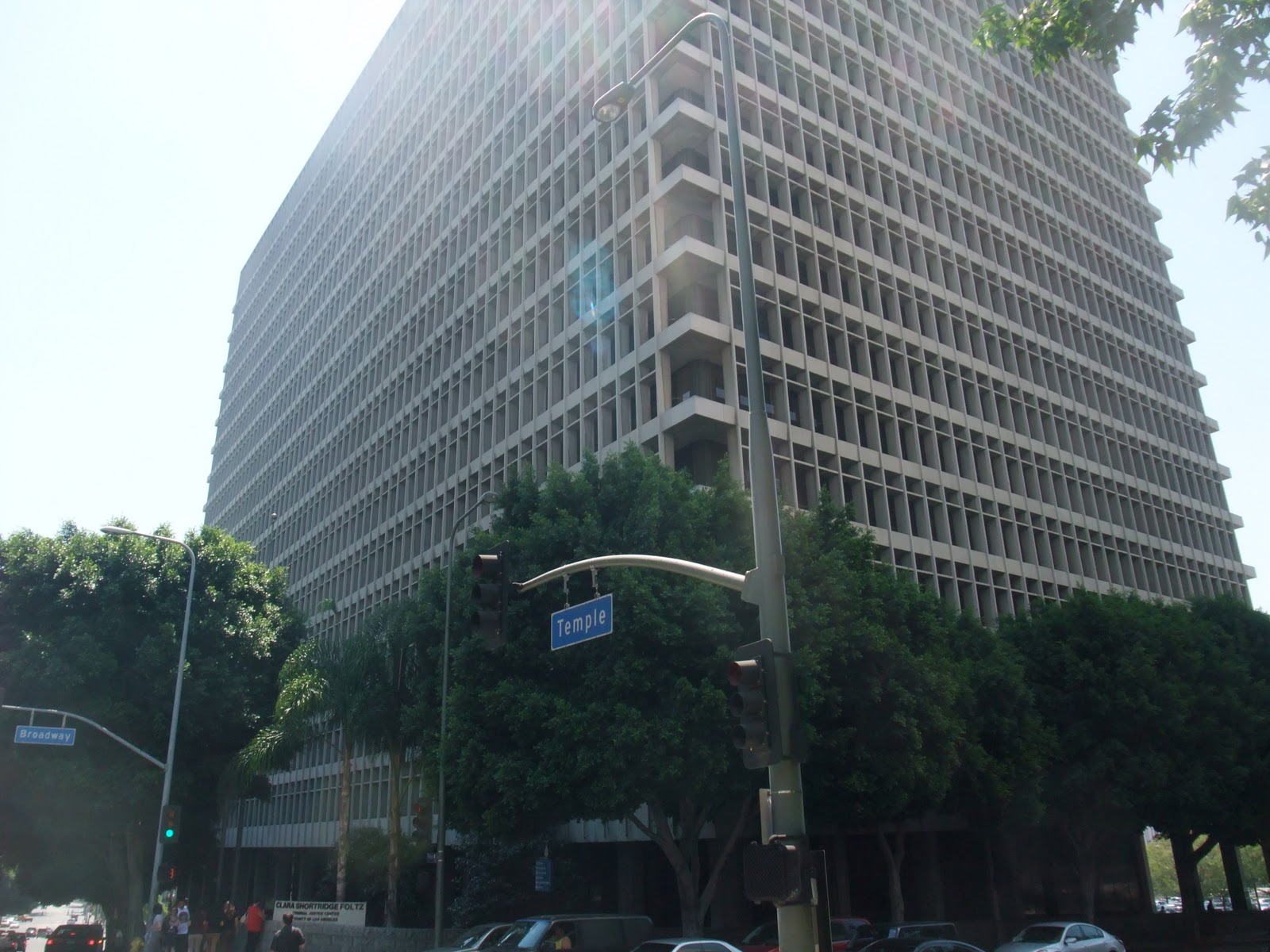
Clara Shortridge Foltz Criminal Justice Center, Los Angeles, California

I took this photograph of the Clara Shortridge Foltz Criminal Justice Center in August 2009.

Sunday, January 23, 2011

A Practical Guide to Elder Abuse and Neglect Law in Canada

The Canadian Centre for for Elder Law has published A Practical Guide to Elder Abuse and Neglect Law in Canada. The content and purpose of the guide is summarized in the Canadian Centre for Elder Law's media release as follows:
This comprehensive resource includes snapshots of the law in each of the thirteen provinces and territories,a comparative table that allows for quick reference, a set of guiding principles for working with vulnerable adults, and sections that discuss mandatory reporting of abuse
and neglect, rules around confidentiality of personal and health information, and the relationship between mental capacity and elder abuse. The guide also contains a lengthy list of resource agencies.

“Circumstances of abuse, neglect and risk present practitioners from every discipline with ethical dilemmas and challenging questions about how to respond pppropriately in order to protect clients without over-stepping oundaries,” says Staff Lawyer Krista James. “Elder abuse is a complex area of practice that involves many areas of law and rules that vary depending on the province in which you are practicing. It is hard for even a specialist to appreciate their obligations. This tool is a practical resource that will help lawyers, social workers and health professionals to enhance their practice in this area.”
You can also read A Practical Guide to Elder Abuse and Neglect Law in Canada in French here.

Saturday, January 15, 2011

Committeeships

“Committeeship” is the legal term we use in British Columbia when the court appoints a guardian to make decisions for an adult who cannot manage himself or his finances. In other places this is called—logically enough—“guardianships.” In some places the term is “conservatorship.”

Whatever term is used, if someone through illness or accident is unable to make their own decisions, it may be necessary for another to make decisions for them. In British Columbia if a family member or friend is mentally incapable of making decisions, then you can apply to the Supreme Court of British Columbia for an order appointing you as that person’s committee.

The requirements are set out in the Patients Property Act, which unfortunately is somewhat dated (thus the words “committee” and “committeeship”). You apply to court by a petition supported by affidavit evidence, including the affidavits of two medical practitioners stating their opinions that the person (referred to in the Act as the “patient”) is incapable of managing himself or his affairs. You also need to set out the person’s next of kin and financial circumstances in an affidavit for the court.

You usually need to serve the person with the petition and the affidavits before the application is heard. This gives him the opportunity to contest the applications. If there is evidence that serving him with the petition will be injurious to his health, you can apply to court to dispense with the requirement that you serve the person.

You also need to provide the Public Guardian and Trustee of British Columbia notice of the application and copies of the petition and supporting affidavits. The office of the Public Guardian and Trustee will then provide you and the court with a letter setting out its position on the application.

The Patients Property Act does not say who else you need to serve before the court hears your application. It says that the court may direct you to give notice to others. In practice, you should either obtain consents to your appointment as committee from anyone who is a close family member of the person, or arrange for them to serve them with the petition and affidavits. For example, if you are applying to be appointed committee of your mother, and she has a spouse, and two other children, you may ask them for consents to your appointment, or if they won’t consent, serve them with the application.

If the person had signed a nomination of committee when they had capacity to do so and which met the formal requirements for making a valid will in B.C., the court must appoint the nominee if the nominee is willing to act unless there is good and sufficient reason to refuse to appoint the nominee.

If the Supreme Court Judge or Master hearing the application is satisfied that the person is incapable of managing himself and his affairs, and that you are the appropriate person to be appointed committee, the court will grant an order declaring that the person is incapable of managing himself and his affairs, and appointing you as committee of his person and his estate.

I should note that it is possible to be appointed as committee of the person only (which gives the committee authority over health care and personal decisions) or of the estate only (which gives the person authority over property and finances). Often the same person is appointed as committee for both, but sometimes these functions are separated with different people appointed for each.

In some cases you may be required to arrange to be bonded before you can act as committee of the person’s estate. Often the Public Guardian and Trustee will suggest that instead of a bond, restrictions be placed on your handling of real estate and investments. For example, the court order could provide that you cannot spend the person’s capital without the consent of the Public Guardian and Trustee or of the court. You could use the patient’s income for the patient, and keep the capital invested.

After you have been appointed a committee, you must keep complete records of your handling of the person’s finances, and you will be required from time to time to provide the office of the Public Guardian and Trustee with your accounts. Keep all receipts and other records.

Is it always necessary for a committeeship when someone becomes incapable of managing their affairs? No. This process can often be avoided by advance planning. If the person made an enduring power of attorney while he or she was capable, the named attorney may use the power of attorney to look after the person’s property and finances (subject to any restrictions in the power of attorney document). Similarly, if the person made a representation agreement, the representative may make health care and personal care decisions for the person who is now incapable of making his own decisions.

I often get telephone calls from people who say something to the effect of “my mother’s doctor says I need power of attorney over her.” In some cases, the mother may still have sufficient mental capacity to make a power of attorney. But more often than not, by the time her physician says that another family member needs one, it is too late for her to make one. In those circumstances, a committeeship is necessary.

Finally, I should note that new legislation, Adult Guardianship and Planning Statutes Amendment Act, 2007 has been passed by the British Columbia Legislative Assembly to repeal the Patients Property Act and replace it with new legislation. Unfortunately, the government has not brought the new legislation into effect, and I don’t know when, if ever, it will be implemented. If it is, “committees” will be replaced with “adult guardians,” and “committeeships” with “adult guardianships.”

Sunday, January 09, 2011

Wilson v. Lougheed

In a recent decision, Wilson v. Lougheed, 2010 BCSC 1868, Madam Justice Ballance varied the will of Norma Yvonne Lougheed to provide Mrs. Lougheed’s daughter, Kelly Wilson, $5.5 million, out of an estate of about $19.5 million. The main beneficiary of Mrs. Lougheed’s will was her husband William Lougheed.


This case was decided pursuant to the Wills Variation Act in British Columbia, which provides that on application by a child or spouse of a deceased person, the Supreme Court of British Columbia may vary the will if it finds that adequate provision has not been made for the child or spouse. The court may then award such provision as the court considers “adequate, just and equitable in the circumstances.”

Norma Lougheed and William Lougheed were married for 35 years, when Norma Lougheed died on May 24, 2007. Kelly Wilson was her only child from a previous marriage. William Lougheed, who also had four children from a previous marriage, adopted Ms. Wilson.

William Lougheed was a very successful real estate developer. As a result Mr. and Mrs. Lougheed lived a privileged lifestyle. They were generous with their daughter and her family, assisting her in acquiring real estate, through gifts and loans, and paid for private schools for her two children. Mr. Lougheed also provided her with substantial investments through a holding company, which was worth approximately $860,000 at Norma Lougheed’s death.

In her will made in March, 1989, Norma Lougheed left her daughter cars, boats, bank accounts and four parcels of real estate, with the rest of her estate going to William Lougheed if he survived her. But before her death, Mrs. Lougheed sold all of the real estate she had left to her daughter in the will. The result was that under the will, Kelly Wilson’s most significant gift was Jewelry worth approximately $273,000, and her share of the estate would be less than 2%.

Not all of Norma Lougheed’s assets passed through her estate. Her half-interest in jointly owned assets with Mr. Lougheed that passed to him by right-of-survivorship was worth over $6,000,000. Kelly Wilson was entitled to her mother’s Registered Income Funds, which were worth about $420,000.

The court found that Kelly Wilson had a close relationship with her mother, and until her mother’s death, with her father, William Lougheed. After Norma Lougheed’s death, William Lougheed became angry Kelly Wilson, and they became estranged.

At the time of her mother’s death, Kelly Wilson and her husband Blair Wilson were having financial difficulties as a result of a failed restaurant business. They had significant debts, and had been depleting their savings. Madam Justice Ballance found that the total net value of Kelly Wilson’s assets was just over $1.2 million.

William Lougheed’s net worth, excluding his share of his wife’s estate, but including the joint assets, was approximately $32 million.

In reaching her decision, Madam Justice Ballance considered the following factors as relevant considerations to a parent’s moral obligations to an adult child:

• relationship between the testator and claimant, including abandonment, neglect and estrangement by one or the other;

• size of the estate;

• contributions by the claimant;

• reasonably held expectations of the claimant;

• standard of living of the testator and claimant;

• gifts and benefits made by the testator outside the will;

• testator’s reasons for disinheriting;

• financial need and other personal circumstances, including disability, of the claimant;

• misconduct or poor character of the claimant;

• competing claimants and other beneficiaries:
In contrast to other recent court decisions, Madam Justice Ballance rejected the view that the court may consider what the claimant would receive under the intestate succession laws if the deceased had died without a will. (See my previous posts here on this issue).

The award in this case reflected the large size of the estate, and Kelly Wilson’s legitimate expectations based on her mother’s history of treating her generously. Madam Justice Ballance wrote:

[357] Moral obligations are independent of a claimant’s financial need. The standard of living a claimant ought to have had or which he or she has become accustomed as facilitated by the testator, may influence the degree of a testator’s moral obligation: Re Berger, [1978] 2 E.T.R. 275 (B.C.S.C.); Mordo v. Nitting, 2006 BCSC 1761 [Mordo]; Walker v. McDermid, [1931] S.C.R. 94; Marsh v. Marsh (Estate), 19 E.T.R. (2d) 184, [1997] B.C.J. No. 1286 [Marsh]. The standard of living and relative financial situation of each person to whom the testator owed a moral obligation are relevant when considering their competing moral claims: Mordo. The standard of living peculiar to the testator may also play a role in determining what constitutes adequate provision: Sawchuk v. MacKenzie Estate, 2000 BCCA 10 [Sawchuk].

[358] It is frequently the case that a claimant’s expectation will be linked to his or her standard of living and the standard of living of the testator, as well as to an appreciation of the nature of any competing interests at play. A testator who has given an assured or implied expectation to an adult child arising from the magnitude of the estate and/or from the testator’s treatment of the child may bring forth or heighten a moral duty: Clucas; Marsh; Saugestad v. Saugestad, 2008 BCCA 38; DeLeeuw v. DeLeeuw, 2003 BCSC 1472.

[359] Throughout their 35-year marriage, William showered Norma with expensive jewellery and other gifts. They drove luxury brand vehicles such as Porsche, Mercedes and Rolls Royce, and owned valuable yachts which they had towed to regattas on the eastern seaboard and raced using hired crews. The palatial custom homes that the Lougheeds constructed over the years were of the finest quality and decorated with the assistance of Norma’s professional designer. Over the years, they owned various vacation properties, including in Hawaii, Palm Desert and on Bowen Island which was purchased, in part, with the proceeds from the sale of Norma’s pre-marriage home. Although Norma was occasionally thrifty over small things, by and large she and William lived in lavish style.

[360] From the time that she married William, Norma looked out for her daughter’s financial prosperity. Although it did not match the pampering that the Lougheeds permitted for themselves, Norma ensured that Kelly enjoyed a financially carefree and privileged lifestyle as a young girl and into her adulthood. Providing for Kelly was considered by the Lougheeds as a natural thing to do given their affluence and love for her.

[361] On account of her parents’ economic means and largesse, Kelly was given vehicles, the use of apartments, her own horse and was able to attend private school, a European finishing school, and other post-secondary institutions, without cost to herself.

[362] Upon Kelly’s marriage, Norma’s benevolence expanded to include Blair and the Wilson children. She periodically helped defray the cost of Kelly’s horseback riding, paid for a membership at the North Shore Winter Club, and covered the initial membership fee of approximately $19,440 for the Wilsons to join an exclusive family recreational club. Kelly was also treated to an occasional shopping spree. The Lougheeds paid for Kelly and Blair to accompany them on holidays abroad, and arranged for the Wilson family to vacation at the Lougheeds’ recreational properties.

[363] Although the gifts and other lifestyle comforts were often paid for using the Lougheeds’ commingled funds or funds out of a Norbill account, I find that as between Norma and William, it was typically her idea to confer such benefits and that she usually funded them. William was not always made privy to the details and did not care to be. He was content to allow Norma to do as she pleased.

[364] Kelly was grateful for her parents’ generosity. She was not a grasping or spoiled daughter, and did not have an inflated sense of entitlement. It was not Kelly’s habit to ask her parents directly for sums of money or other material benefits.
….

[368] Through their actions, Norma and William instilled in Kelly their views about the value of money. Norma encouraged Kelly to look to her for financial assistance and security, and to take comfort in knowing that she would ensure that Kelly would not have to want financially. At no time did Norma tell Kelly or even hint that the financial security would effectively dry up on Norma’s death. Kelly’s upbringing by her generous parents and especially her beneficent mother, coupled with the abundance of Norma’s estate and the independent wealth of her father who did not intend to provide for Kelly in his will, could not help but implicitly raise a legitimate expectation on Kelly’s part that her mother would continue to ensure her worry-free financial well-being in death as it had been in life. These factors also support the companion expectation that Kelly would receive a greater share of her mother’s estate than was left to her under the 1989 Will.

[369] In keeping with her discomfort in speaking about death or dying, Norma did not discuss the contents of her 1989 Will with Kelly. In my view, Kelly had every reason to believe that her mother would provide for her on her death in a manner consistent with her pattern of ensuring a lifestyle of financial security and privilege while she was alive. In this case, Kelly’s bona fide expectations significantly strengthen the moral duty that Norma owed to her.
Madam Justice Ballance further found that there was nothing in Kelly Wilson’s conduct towards her mother to disentitle her to a larger share of the estate, and made the $5.5 million award.

Monday, January 03, 2011

Seniors Outreach Workshops

Seniors Outreach & Resource Centre are presenting a series of weekly workshops from January 11 through February 15, 2011 in or near Kelowna, B.C.

I will be speaking at Trinity Baptist  Church, 1905 Springfield Road, Kelowna,  on Tuesday, February 8, from 10:00 am to noon. My topic is Powers of Attorney, Representation Agreements and Committeeships (Adult Guardianship).

The complete schedule of workshops is as follows:

Jan. 11, 2011
Topic: Housing Options for Seniors: Independent Market Housing,
Subsidized/Low-Income Housing, Supportive Housing, Assisted
Living and Residential Care
Presented by Seniors Outreach and Resource Centre Interior Health
Time and Place
10:00am to Noon
Trinity Baptist Church
1905 Springfield Road

Jan. 17, 2011
Topic: Your Rights as a Tenant:
The Residential Tenancy Act and How it Protects Renters
Presented by TRAC – Tenant Resource & Advisory Centre
OARS—Okanagan Advocacy and Resource Society
First location—same content as January 18th workshop
Time and Place
10:00am to Noon
Westbank Manor,
(Lions Housing)
3715 Gellatly Road

Jan. 18, 2011
Topic: Your Rights as a Tenant:
The Residential Tenancy Act and How it Protects Renters
Presented by TRAC – Tenant Resource & Advisory Centre
OARS—Okanagan Advocacy and Resource Society
Second location—same content as January 17th workshop
Time and Place
10:00am to Noon
Rutland Senior Centre,
765 Dodd Road

Jan. 25, 2011
Topic: Financial Benefits and Resources: Options and Eligibility
Presented by Seniors Outreach and Resource Centre Service Canada
Service BC Veterans Affairs Credit Counselling Society
Time and Place10:00am to Noon
Trinity Baptist Church
1905 Springfield Road

Feb. 1 , 2011
Topic: Wills and Estates Matters: Planning Ahead
Presented by Dylan J. Switzer, FH&P Lawyers
Time and Place
10:00am to Noon
Trinity Baptist Church
1905 Springfield Road

Feb. 8, 2011
Topic: Representation Agreements, Powers of Attorney and
Committeeships: Who Will Act on Your Behalf?
Presented by Stan Rule, Sabey Rule LLP
Time and Place
10:00am to Noon
Trinity Baptist Church
1905 Springfield Road

Feb. 15 , 2011
Topic: Elder Abuse and Neglect: How are You Protected?
Presented by Interior Health
Public Guardian and Trustee
Time and Place
10:00am to Noon
Trinity Baptist Church
1905 Springfield Road

For more information, you may contact Seniors Outreach:
Phone: (250) 861-6180
Fax: (250) 861-6153
Email: seniors2@telus.net
http://www.seniorsoutreach.ca/